Stories
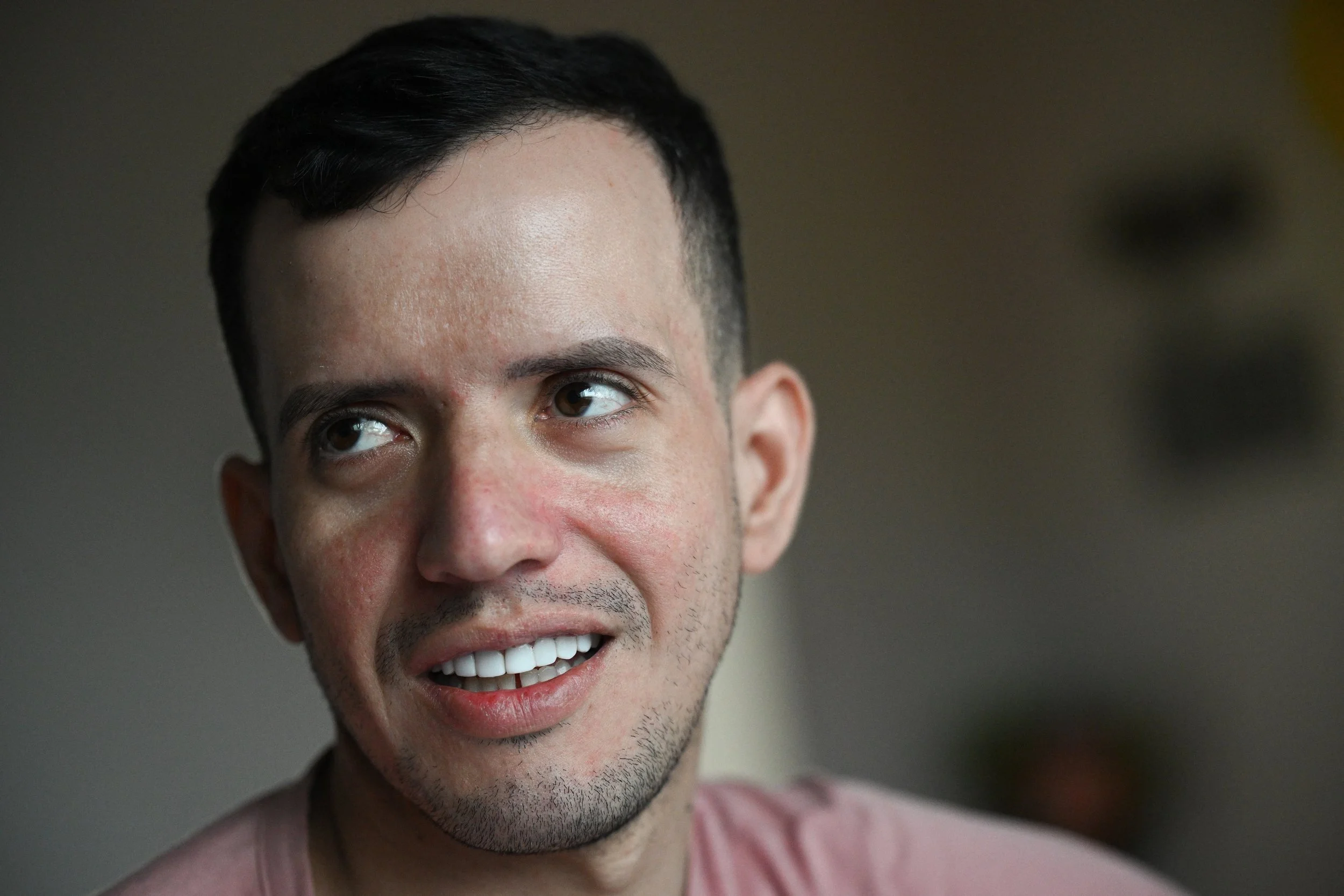
Andry
“We were stuck in hell, and we were told we would never leave that place.”
Andry Hernández Romero recalled of the four months he was held incommunicado in El Salvador’s notorious CECOT prison while being tortured, beaten and subjected to sexual abuse.
Andry is a gay man who fled persecution in Venezuela to seek asylum in the United States. While his asylum claim was pending before a U.S. immigration court, the Trump administration disappeared Hernández Romero and others to CECOT. He and other Venezuelans the Trump administration claimed were gang members, in many cases without any evidence of criminal records or gang membership, were eventually forcibly returned to Venezuela as part of a prisoner swap, without consideration of the harms they fled there. In February 2026, Andry fled Venezuela to seek asylum in Spain. “Entering the US at this time doesn’t guarantee I will keep my freedom and that is why I will continue to fight my case from Spain,” he said. “I can say I feel safe here, this is a place where I can be reborn, heal my mental health, let people know about my abilities as a makeup artist and find the happiness they took away from me more than a year ago,” he shared.
F.A.
F.A. and her husband were targeted by the Turkish government for their membership in the Gülen, also known as Hizmet, movement, a religious and political movement in Turkey.
After a warrant was issued for his arrest, F.A.’s husband fled Turkey to seek asylum in the United States. F.A. followed with their two minor children after the disappearance of one of the children’s teachers and reports of the torture of Gülen movement members. F.A. and her children entered the United States in early February 2025 and repeatedly told immigration officials that they had come to seek asylum and that F.A. ʼs husband was in the United States seeking asylum for the same reasons. After nine days in detention, F.A. and her children were expelled on a military plane to Panama, where they were detained in a hotel without the ability to communicate with anyone outside.
As she said in her declaration filed with a U.S. federal court:
“While we were at the hotel…some government officials came to tell us that if we wanted to stay in Panama, we would have to go to a detention camp in the jungle… By the way they talked about it, I was fearful that we would not survive if we got sent there. For that reason, I felt pressured to accept a return to Turkey for myself and my kids. We are now in hiding in Turkey, and I am unable to find a job because of my affiliation with the Gülen…I live in fear every day. I pray that we can reunite with my husband soon.”
D.A. & K.S.
D.A., a political activist who was violently attacked in Nigeria and is married to a U.S. citizen, and K.S., a bisexual man from Gambia (where same-sex relationships are criminalized), were both granted protection from removal to their home countries based on likely persecution or torture.
ICE deported them without paperwork to Ghana on a military cargo plane in the middle of the night alongside a dozen other West African men and women. Upon arrival, Ghana immediately deported K.S. to Gambia in a clear act of chain refoulement. D.A. was detained in a camp under terrible conditions for more than two weeks and with limited access to a phone to call his wife – until Ghanaian authorities deported him to Togo.
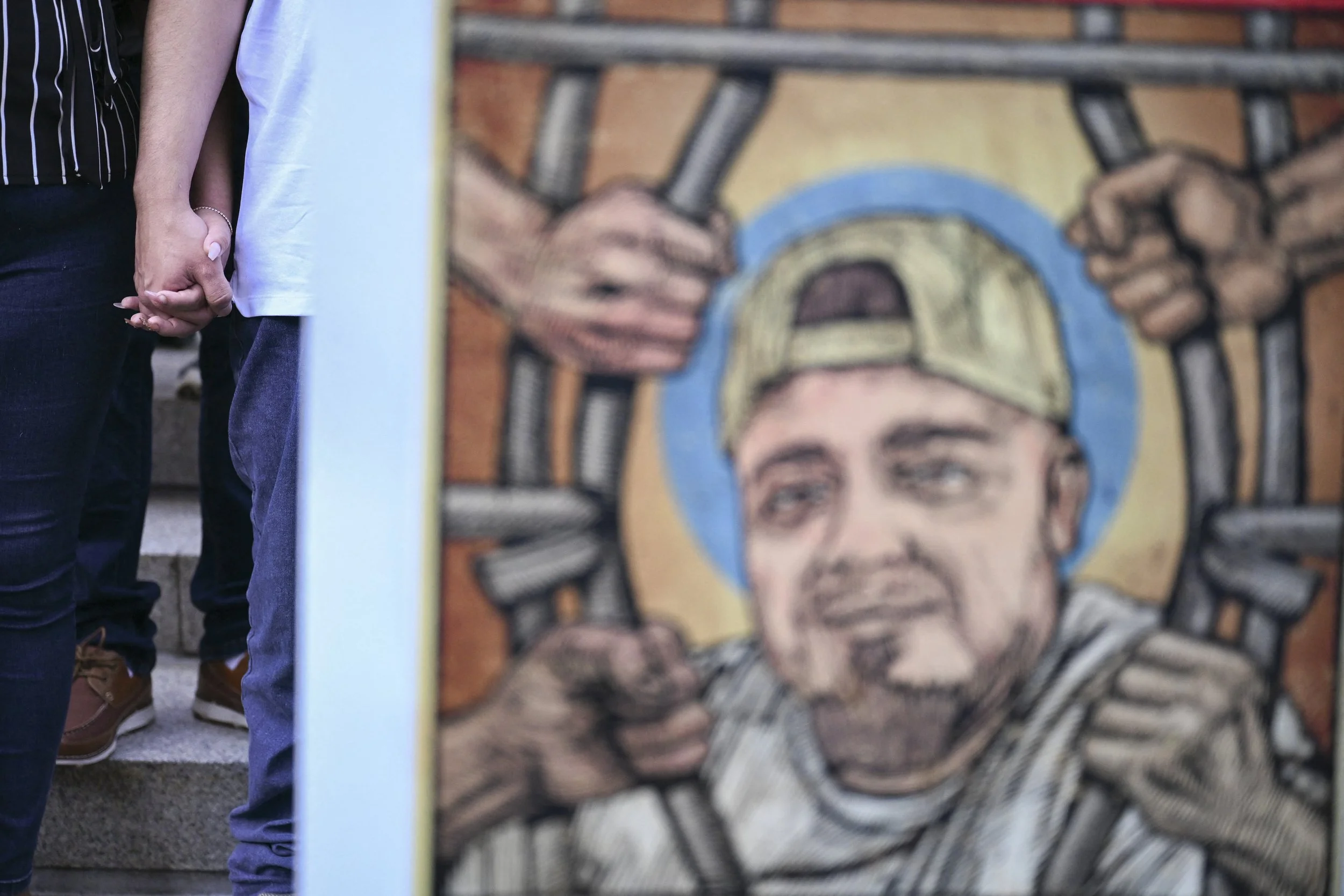
Kilmar Abrego Garcia
The attempt to deport Kilmar Abrego Garcia to a third country underscores that the Trump administration is using the threat of forced transfer as a means of coercion or punishment against immigrants who are trying to exercise their rights or who have been granted protection against removal to their home countries.
The Trump administration mistakenly sent Abrego Garcia to CECOT in violation of an immigration court withholding of removal order finding that he would likely be persecuted if returned to El Salvador. In El Salvador, Abrego Garcia was subject to “severe beatings, severe sleep deprivation, inadequate nutrition, and psychological torture.
Since being required by a federal court order to return Abrego García to the United States, the Trump administration has been relentless in trying to punish him through criminal prosecution, belatedly charging him for smuggling that allegedly occurred in 2022. DHS also told Abrego Garcia that if he pled guilty to a criminal charge, he would be deported to Costa Rica; otherwise, DHS would deport him to Uganda. But when Abrego Garcia arranged to depart for Costa Rica, DHS continued to insist on his removal elsewhere and asked officials from Eswatini, Ghana, Uganda, and Liberia to accept Abrego Garcia.
In the words of Abrego Garcia’s attorney to a federal judge in Maryland:
“effectively, they [Trump administration officials] are holding hostage passage to Costa Rica to … induce him to plead guilty…They have spun the globe and picked various places that they can identify, whether it's to control him for political gain …selecting places…he has no relationship to.”
Soon after Liberia agreed to receive Abrego-Garcia, the United States extended visa validity for Liberian citizens on business visas from 12 months to 36 months. In mid-February 2026, the judge in Maryland ruled Abrego Garcia could not be detained and agreed with his attorneys about DHS’s strategy. She wrote that the government "made one empty threat after another to remove him to countries in Africa with no real chance of success…From this, the Court easily concludes that there is no 'good reason to believe' removal is likely in the reasonably foreseeable future." The U.S. government has continued to claim he is a criminal trafficker (rather than a victim of wrongful deportation) and assert that it intends to send him to Liberia. Legal scholars filed a brief in Abrego Garcia’s case that explains why doing so constitutes “penal exile” and violates the Constitution's Due Process Clause and Eighth Amendment.
Y.A.
Y.A. fled Somalia after her stepmother subjected her to female genital mutilation and forced marriage to a much older man. Before the marriage could take place, members of her fiancé’s clan kidnapped her, and her fiancé attempted to rape her. Y.A. fled first to Kenya and South Africa but was unable to find safety in either country, prompting her to seek refuge in the United States.
After entering the United States in October 2024, Y.A. was detained by DHS and applied for asylum, withholding of removal, and protection under the Convention Against Torture. On September 4, 2025, the immigration judge pretermitted her applications and ordered her removed to Honduras or, alternatively, Uganda, under Asylum Cooperative Agreements.
Y.A. remains detained, with her administrative appeal pending. She fears severe harm if removed to Honduras as a Black, Muslim woman who does not speak Spanish, and if removed to Uganda, she fears being located by the family she fled, forced to marry her attempted rapist, or subjected to further gender-based violence. After the pretermission order, Uganda announced it would no longer consider asylum claims from Somali nationals.
L.H. & Y.V.
L.H., an Indigenous Quechua woman, fled Peru in 2021 with her minor son, Y.V., after years of severe gender- and race-based domestic violence by her ex-partner, including kidnapping, stalking, and a knife assault. The police repeatedly failed to protect her, despite numerous reports.
After arriving in the United States in May 2021, L.H. and Y.V. settled in California and timely applied for asylum. At a November 2025 immigration court hearing, DHS moved to pretermit her applications and seek their removal to Honduras under an Asylum Cooperative Agreement. L.H. fears deportation to Honduras, where she faces a serious risk of gender- and race-based violence and heightened danger as a single mother without male protection.
C.O.
Despite having protection under the Convention Against Torture that barred his removal to El Salvador, C.O. was detained by ICE in May 2025 and transferred among multiple U.S. detention facilities, during which officers pressured him to accept removal to Mexico—which he refused. In early October 2025, ICE transported him to the U.S.–Mexico border and transferred him to Mexican authorities.
Mexican officials subsequently drove him to the Guatemalan border and handed him over to Guatemalan authorities, who then transported him to the border with El Salvador. This series of transfers concluded in chain refoulement, with C.O. remaining shackled during transit. Upon arrival in El Salvador, Salvadoran authorities detained him and told him they were going to send him to CECOT, the notorious maximum-security prison. According to a sworn declaration from his wife, C.O. called her, terrified and crying. He said he told the officers he had been granted protection from the United States and he didn’t understand why he ended up in El Salvador. He said the officers told him that he was going to spend the rest of his life in prison. Since October 9, 2025, his family has had no contact with him and fears for his safety.
K.V.V. and P.R.
K.V.V. is a 49-year-old Vietnamese national who came to the United States as a refugee at age eight in 1984. He was ordered removed in 2007 following a criminal conviction, completed his sentence, and remained on supervised release for 18 years before ICE arrested him in March 2025. On October 6, 2025, he was removed to Eswatini as part of a group transfer. Since his detention in Eswatini, K.V.V.’s physical and mental health have deteriorated significantly; his family in the United States reports weight loss, emotional distress, and fear that he will remain indefinitely exiled in Eswatini.
P.R. is a 42-year-old Cambodian national born in a refugee camp in Thailand after his family fled the Cambodian genocide. He entered the United States in 1985 at age three and lived there for 40 years. In 2010, he was ordered removed to Thailand, a country of which he is neither a citizen nor national. After completing his criminal sentence in January 2025, he remained in ICE custody for nine additional months before being deported to Eswatini on October 6, 2025. P.R.’s sister says that he is extremely frustrated by his arbitrary imprisonment in Eswatini.
These men, and others detained in Eswatini, report that it’s very hot and humid, and the prison does not have air conditioning.They are feeling miserable because of their situation, and the heat and humidity make the conditions of their indefinite imprisonment even more unbearable. The Trump administration made no efforts to try to deport K.V.V. and P.R. to their home countries before banishing them like men without countries to Eswatini.
Farah
Farah, a 21-year-old gay Moroccan woman, was forcibly removed to Cameroon on January 15, 2026.
Farah had fled Morocco because her family beat and tried to kill her when they found out about her homosexual relationship. She fled to the United States to seek asylum but, upon arrival in early 2025, was detained for around a year. In August 2025, an immigration judge found that she would likely be persecuted if removed to Morocco and granted her withholding of removal, a humanitarian protection that prohibits the United States from returning her to Morocco and allows her to live and work in the United States. However, the U.S. government continued to detain her and, in mid-January 2026, summarily removed her to Cameroon without giving her a chance to express fear of being sent there – a country where homosexuality is criminalized.
“They asked me if I wanted to stay in Cameroon,” Farah told a reporter, “and I told them that I can’t stay in Cameroon and risk my life in a place where I would still be endangered.” She decided to return to Morocco, where she remains in hiding. “It is hard to live and work with the fear of being tracked once again by my family,” she said. All of the other people who were forcibly transferred to Cameroon in January and February 2026 face the same impossible choice that Farah did – as judges have found them likely to face persecution and torture in their home countries.
Maria
Maria is a 29-year-old woman who fled Colombia in January 2024 because she was kidnapped and tortured by the FARC rebel group and abused by her ex-husband, a police officer.
In May 2025, a U.S. immigration judge found that she would more likely than not be tortured if deported to Colombia and granted her protection under the Convention Against Torture. On April 17, 2026 the United States suddenly deported her to the Democratic Republic of the Congo, where she said she feels “pressured to agree to go back” to Colombia, despite the immense risk she would face. As she explained: “It was only the day before my transfer that I learned I would be coming to the Democratic Republic of Congo. I was being held in Louisiana…I immediately said I was scared…Even when I was about to board the plane, I said I didn't want to go. But they told me, ‘We're not asking you if you want to or not; you have to go’…Upon arrival, the IOM gave us a presentation…They told us they would take care of us for seven days. During those seven days, we must decide if we want their assistance to return to our country under a voluntary return program. If we accept, we can stay in the DRC for three months on a tourist visa. If we decline, we still have the visa, but they will no longer cover the hotel, food, or accommodation costs – we will have to pay for those ourselves…And something very important: we have no identity documents, no passport, because ICE took them away. Without a passport, I can't travel. I only have a tourist visa on a piece of paper.”
k
K, a 23-year-old man, fled Belarus after he was stalked and threatened for participating in political rallies opposing the government.
In Mexico, K applied and waited for a CBP One appointment, but the appointment system was shut down by the Trump administration in January 2025. Extorted and threatened in Mexico in early 2026, K crossed onto U.S. soil and walked towards a port of entry in South Texas, where he was arrested by the U.S. Border Patrol. Agents ignored K’s request for political asylum and took him into custody, where they transferred him to another border point and told him he would be deported to Belarus. In detention, he received an interview over the phone during which K explained that he faced political persecution in Belarus. The officials on the phone told him he did not have compelling grounds for asylum, and that he did not qualify. His phone, which contained all the evidence related to his persecution, was taken from him and never returned. K was told he was going to be transferred to another detention center. Around midnight he was shackled and put on a plane but not told where he was going. He landed in Costa Rica in late April 2026 and fears for his life if he is returned to Belarus.
Javier
Javier (pseudonym) left Colombia in 2023 due to threats from armed groups where he worked in the medical field.
He traveled with his wife and two children to the U.S. where they applied for asylum. After Javier obtained a work permit, while his wife was pregnant, and when waiting for their merits hearing in immigration court, ICE detained Javier. He remained in detention for three months and was denied asylum and deported to Colombia in March of 2026 despite having significant evidence of the dangers he faced there. While in Colombia, his son was born and placed in the NICU. Desperate to reunite with his wife, children, and newborn, he reentered the U.S. He was detained at the border and quickly deported to Costa Rica in June of 2026. He has yet to meet his third child. He is applying for asylum in Costa Rica, hoping to one day reunite with his family there.
Khadija
Khadija fled Ghana, afraid for her life because of her sexual orientation.
She crossed the U.S. border in December 2024 to seek asylum and was detained at the Eloy detention center in Arizona for over a year. Denied eligibility for asylum only because of the unlawful “circumvention of lawful pathways” regulation, an immigration judge found that Khadija proved she was a refugee and granted her withholding of removal in July 2025. Despite this, ICE continued to detain her and, in January 2026, deported her to Cameroon, a country that also outlaws homosexuality. As of July 2026, Khadija remains in insecure limbo, afraid to go outside the building in Cameroon she and other third country nationals live in, where conditions are poor, and unable to return to her home country, where she fears likely persecution Listen to Khadija’s testimony.
S
S, a Nigerian Christian, came to the United States in 2001 and applied for asylum due to her fear of religious persecution. A U.S. immigration judge found that S would be persecuted if returned to Nigeria and granted her withholding of removal. She is the primary breadwinner for her family of four U.S. citizen children and husband, who is disabled. At a routine ICE check in in Los Angeles in July 2026, S was arrested, detained, and summarily deported to Ghana, separating her from her family that needs her and from the country she has called home for 25 years. Within 24 hours of arrival in Ghana, the Ghanaian authorities refouled S to Nigeria, where she is fearful of the persecution she fled.
P
P sought asylum in the United States in 2024. He has previously been detained by the police in Russia for participating in a rally in support of Alexei Navalny in St. Petersburg and feared future persecution for his work as an organizer for the Russian Anti-War Movement (RAWA), designated an "undesirable organization" in the Russian Federation. Ineligible for asylum because of the 2023 Circumvention of Lawful Pathways regulation, an immigration judge granted P withholding of removal in June 2025. DHS nonetheless continued to detain P for many months in various facilities and then to deport him to Uzbekistan, suddenly, on March 10, 2026, a week after he filed a petition for habeas corpus. “We flew for two days in handcuffs and shackles. On the plane, the officers also didn’t answer my questions about where I was being deported. I only learned this when the plane landed in Uzbekistan,” P told Third Country Deportation Watch. “I feared being sent back to Russia, where I could face criminal prosecution for my political views.” The Russian Anti-War Committee bought P a plane ticket to another country and he was able to leave the next day, when the representatives of the Uzbek Ministry of Foreign Affairs took him to the airport and gave him his passport.